
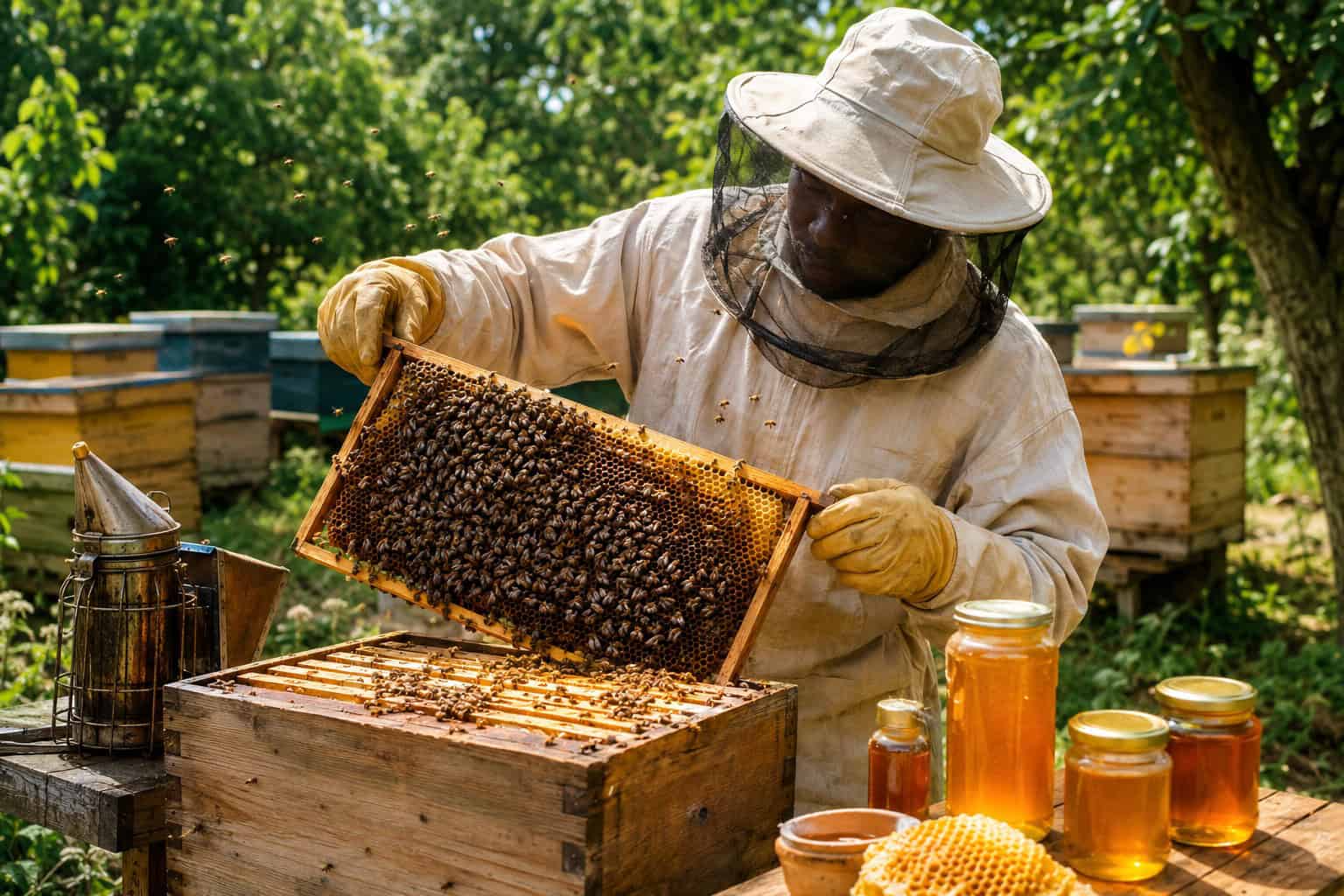

When you walk through a flowering farm on a sunny morning and you’ll hear the gentle buzz of bees moving from flower to flower. To many, bees are simply insects that sting or make honey. But behind every hive lies one of nature’s most remarkable agricultural systems one that supports food production, creates employment, protects biodiversity, and contributes billions of dollars to the global economy.
Beekeeping is among the oldest agricultural practices known to humanity, yet it remains one of the least explored enterprises in many developing countries, including Nigeria. As demand for natural honey grows, beekeeping is gaining recognition as a profitable, sustainable venture one with much to offer farmers, entrepreneurs, and anyone interested in agriculture.
Bee Production and Beekeeping
Bee production refers to managing honeybee colonies to obtain useful products honey, beeswax, pollen, royal jelly, propolis, and bee venom used in homes, hospitals, food industries, pharmaceuticals, and cosmetics. Unlike many forms of livestock farming, it requires little land or capital, since bees forage for their own nectar and pollen.
Beekeeping (apiculture) – is the art and science of rearing bees for economic and environmental benefit. A beekeeper (or apiarist) provides suitable hives, monitors bee health, protects colonies from pests and disease, and harvests products without destroying the colony. Modern beekeeping blends biology, agriculture, environmental management, and business.
The History of Honey Production
Humans have harvested honey from wild bee colonies for thousands of years the Egyptians, Greeks, and Romans kept bees in clay pots and woven baskets. In Nigeria, honey hunting predates written records: people searched forests for wild colonies and harvested honey from tree hollows and rock crevices, often destroying the colony in the process.
Modern beekeeping has replaced much of this. Instead of destroying wild colonies, beekeepers now use hives like the Kenyan Top-Bar Hive and Langstroth Hive, along with protective clothing, smokers, hive tools, and extractors allowing repeated, safer, and more hygienic harvests.
How Bees Make Honey
Worker bees collect nectar from flowers using their long tongues, storing it in a “honey stomach.” Back at the hive, the nectar passes between bees, where enzymes break down complex sugars into simpler ones. It’s then deposited into honeycomb cells, where bees fan their wings to evaporate excess moisture until it thickens into honey. Each cell is then sealed with beeswax for preservation a process that showcases the extraordinary teamwork within a colony.
What Makes Honey Special
Honey’s two major sugars are glucose, which gives quick energy (used in sports drinks, medical solutions, and energy supplements), and fructose, which is sweeter and releases energy more gradually (found naturally in fruits and fruit juices). Together they make honey both a quick and sustained energy source.
Beyond sugar, honey contains minerals such as calcium, iron, potassium, sodium, copper, phosphorus, and manganese supporting bone health, blood formation, muscle and nerve function, and metabolism plus enzymes, antioxidants, amino acids, vitamins, and organic acids. Unlike refined sugar, honey offers real nutritional value alongside its calories.
Honey as Food and Medicine
Honey is prized both as food and medicine. Athletes use it to replenish energy; it’s easy to digest for those recovering from illness; and mixed with warm milk, it makes a nourishing drink. In baking, it retains moisture and keeps bread and cakes fresh longer.
Medicinally, honey’s antibacterial and anti-inflammatory properties have long been used to soothe sore throats, ease coughs, and support wound healing some hospitals now use medical-grade honey for wound care. It also appears in pharmaceuticals, cosmetics, skincare, and animal feed.
Beyond Honey: Other Valuable Bee Products
– Beeswax– used in candles, polish, lip balm, soaps, cosmetics, and waterproof coatings.
– Propolis– a resin bees use to seal and protect the hive, now used in herbal medicine, toothpaste, and supplements for its antimicrobial properties.
– Royal jelly– the queen bee’s exclusive food, sold as a health supplement and used in premium skincare.
– Bee pollen– rich in protein, vitamins, and antioxidants; sold as a supplement and added to cereals and smoothies.
– Bee venom– studied for potential use in managing certain inflammatory conditions.
Together, these products extend bee production well beyond honey into agriculture, manufacturing, healthcare, and cosmetics.
Why Bees Matter to Agriculture
Perhaps bee’s greatest contribution isn’t honey it’s *pollination* As bees move between flowers, they transfer pollen that helps plants produce fruits, vegetables, seeds, and nuts. Crops like watermelon, cucumber, orange, mango, cashew, cocoa, coffee, apples, tomatoes, and pumpkin depend heavily on bee pollination. Without bees, yields would fall significantly making bee protection essential not just for honey, but for global food security.
Beekeeping as a Business Opportunity for Nigerians
Beekeeping is both eco-friendly and economically rewarding. Since bees gather their own food, feeding costs are minimal. Demand for pure, natural honey keeps rising in Nigeria as consumers turn away from refined sugar. Beyond honey sales, beekeepers can earn from beeswax, pollen, propolis, royal jelly, and pollination services making it a practical option for young job seekers, retirees, and farmers looking to diversify.
Getting Started
– Learn the basics through training centres, experienced beekeepers, cooperatives, or extension services.
– Choose a quiet apiary site with abundant flowering plants, reliable water, and minimal disturbance.
– Acquire essential equipment: modern hives (Langstroth or Kenyan Top-Bar), protective clothing, gloves, veil, smoker, hive tool, extractor, and storage containers.
– Inspect colonies regularly, manage pests, and harvest only mature honey.
With good management, a single healthy colony can produce honey for years.
Beekeeping in Nigeria
Nigeria’s climate supports flowering plants year-round in many regions, making it well-suited to beekeeping. States such as Kaduna, Kwara, Niger, Ogun, Oyo, Taraba, Benue, Nasarawa, Plateau, and the FCT have active beekeeping communities supplying local markets, supermarkets, processors, and exporters. Research institutes, universities, agricultural programmes, and beekeeper associations continue to offer training and improved hive technologies, drawing growing interest in commercial beekeeping.
Challenges
Despite its potential, beekeeping faces real obstacles: bush burning and deforestation that destroy habitats, pests like ants and wax moths, poor harvesting and storage practices, honey adulteration, limited access to modern equipment, and inadequate training. Addressing these requires better education, government support, and investment in equipment and awareness.
A Bright Future
As the world shifts toward healthier lifestyles and sustainable agriculture, demand for natural honey and bee products keeps growing and industries continue expanding their use of beeswax, propolis, and royal jelly. Farmers, too, increasingly recognize that healthy bee populations improve crop yields.
Bee production and beekeeping are far more than honey harvesting. They combine agriculture, environmental conservation, science, and entrepreneurship into one sustainable enterprise. For Nigeria, where agriculture remains a pillar of the economy, beekeeping offers real opportunities for employment, entrepreneurship, and rural development.
The next time you see a bee hovering over a flower, remember: you’re watching one of nature’s hardest workers at an untapped opportunity one capable of improving livelihoods, strengthening food security, and building a more sustainable future.
By Ebenezer Okorie Atulegwu